Let’s Build Something Great
Tell us about your goals and request a free project estimate.


Searching Reddit for a graphic design agency can help you understand pricing, compare providers, and identify problems that arise when creative projects lack a clear scope. Discussions among designers, freelancers, and business owners reveal practical issues involving revision rounds, editable source files, packaging specifications, and production-ready artwork. This guide examines those discussions and explains how to evaluate an agency’s portfolio, creative process, technical capabilities, deliverables, and pricing before commissioning design work.
Reddit discussions provide firsthand perspectives on working with designers, commissioning creative work, and managing the relationship between a client and a design provider. They also reveal disagreements about pricing, source files, and the boundaries of a design contract.
These discussions are individual experiences, not a representative survey of the graphic design industry. Their value lies in the practical questions they raise before you commit to a project.
In a May 2026 discussion in r/graphic_design about working at a small agency, a designer described being asked to produce approximately 15 social media posts for two clients after receiving very little briefing.
The designer lacked clear information about the clients’ brands, target audiences, visual guidelines, and creative direction. The work therefore involved trying to determine what the clients needed while producing the requested assets.
The responses disagreed about whether this situation was an unavoidable part of working at a small business or a sign of inadequate creative direction.
For a client commissioning design work, the practical lesson is to establish the information the designer needs before production begins.
A useful creative brief should identify:
For example, commissioning 20 social media graphics without establishing the visual style, content hierarchy, and intended audience can create unnecessary revisions. A defined brief gives the designer a basis for making decisions and gives the client a way to evaluate the result.
In a September 2026 Reddit discussion about handling extra design revisions, designers discussed whether additional rounds should incur extra fees.
Several participants recommended including a revision limit in the contract. One explained that a revision round should represent one consolidated batch of feedback, rather than a collection of comments arriving through different channels over several days.
Other participants described different arrangements, including hourly billing and packages with different numbers of included revisions.
This variation matters because revision policies directly affect budgets, deadlines, and expectations.
Before hiring a graphic design agency, clarify:
The number of rounds should match the project’s complexity. A multi-page publication may need a different approval process from a single social media graphic.
The agreement should distinguish refinements to an approved direction from requests that introduce new concepts, additional assets, or substantial changes to the original brief.
A graphic design portfolio should demonstrate the provider’s ability to solve the particular visual and production problem you need to address.
An agency that produces excellent social media graphics may not automatically have the technical experience required to prepare packaging for commercial manufacturing. Similarly, a designer specializing in print publications may not be the ideal choice for a campaign that requires animated advertisements.
Start by identifying the primary category of design work your project requires.
| Project type | What to examine in the portfolio |
|---|---|
| Marketing materials | Layouts, typography, readability, information hierarchy, and print preparation |
| Social media and digital graphics | Platform-specific formats, consistency, campaign variations, and reusable templates |
| Print and packaging | Label systems, dielines, production specifications, and print-ready artwork |
| Motion graphics | Animation quality, pacing, visual storytelling, and appropriate output formats |
| Presentations and publications | Content structure, typography, editorial layouts, and readability across pages |
| Advertising campaigns | Visual consistency across campaign assets, formats, and placements |
Look beyond isolated mockups. Ask to see the actual deliverables when appropriate, particularly if your project involves complex layouts, multiple product variations, or production files.
A portfolio should also demonstrate that the designer understands the medium in which the work will be used.
For a brochure, that may mean readable typography, organized content, and appropriate print specifications. For digital advertising, it may mean adapting the visual hierarchy to different placements while keeping the message clear.
For packaging, it involves additional considerations such as product dimensions, materials, printing methods, and manufacturer requirements.
Ask the agency to explain the requirements behind a relevant project and how those constraints influenced the design decisions.
The goal is to establish whether the provider can produce work that functions in your actual business environment, not simply create an attractive presentation image.
Packaging design introduces requirements that do not apply to many other graphic design projects. The artwork must fit the physical product, accommodate manufacturing requirements, and reproduce correctly through the intended printing process.
In a September 2026 discussion in r/graphic_design about packaging a coffee product in four sizes, a designer had developed the visual concept in Figma but had not received the packaging dielines or production specifications.
The designer was unsure how to prepare the artwork for different package sizes and which file formats and export settings the client or printer would require.
The discussion highlights the difference between approving the visual design and preparing the final production files.
For packaging, the printer or manufacturer should supply the appropriate dieline or confirm the required dimensions and construction specifications.
The design must account for the physical packaging, not just the appearance of a flat layout on screen.
Depending on the project, the relevant requirements may include:
A February 2024 discussion about preparing artwork for a packaging client recommended obtaining the dieline and production requirements from the printer or manufacturer before proceeding.
That advice is particularly relevant when the project involves several package sizes or specialized finishes.
The client should also clarify who is responsible for obtaining specifications, checking the artwork, approving proofs, and coordinating with the printer.
Ask to see examples of packaging projects that progressed beyond concept presentation into production-ready artwork.
Look for evidence of consistent product differentiation, accurate information hierarchy, and a design system that accommodates multiple variants.
For a product range containing several flavours, sizes, or formulations, the designer may need to create a common visual structure while ensuring that customers can distinguish each product easily.
Playful Sparkle’s LILI-MED packaging case study describes a packaging system for a Slovak honey producer. Its documented scope includes label design, visual identity refinement, custom illustrations, typography, print design, and production preparation.
The case illustrates why packaging design requires both visual decisions and technical preparation for the intended manufacturing process.
Pricing is one of the most difficult aspects of hiring a graphic design provider because similarly named services may include very different deliverables.
A quote for a single social media graphic is not comparable to one covering campaign development, multiple formats, original illustrations, several revision rounds, and editable working files.
In a February 2026 r/graphic_design discussion about logo pricing, designers reported different prices and package structures.
The discussion included a designer charging around $400 for a logo project with research, moodboarding, multiple concepts, and revisions. Other participants described different price levels, including packages starting at $2,500.
These figures are individual examples, not market averages or recommendations for your budget. The thread itself highlights the importance of considering experience, location, deliverables, project complexity, and client context.
The same principle applies to graphic design agencies. A price only becomes meaningful when you understand what it covers.
Request a proposal that clearly defines the work included.
| Scope item | What to clarify |
|---|---|
| Discovery and briefing | Research, objectives, audience, and creative direction |
| Concept development | Number of concepts, design directions, or initial alternatives |
| Design production | Number and type of assets, pages, or variations |
| Revisions | Included rounds, feedback process, and additional charges |
| Adaptations | Resizing, alternate formats, languages, and platform variations |
| Source files | Editable working files, packaging, and delivery arrangements |
| Production preparation | Print specifications, technical checks, and export settings |
| Usage rights | Permitted uses, licensing restrictions, and ownership terms |
| Delivery | Final formats, file organization, and agreed deadlines |
A detailed quote helps you identify hidden costs before the project begins.
For recurring design requirements, such as monthly social media graphics or frequent product catalogue updates, ask whether a project-based fee or an ongoing agreement better fits the expected workload.
The best arrangement depends on the volume of work, the predictability of demand, and how frequently the creative direction changes.
One recurring disagreement on Reddit concerns whether the client should receive editable source files in addition to the finished artwork.
This is important because the final exported file and the working document serve different purposes.
A print-ready PDF may be sufficient for a printer to produce a brochure. An editable InDesign or Illustrator file may be needed when another designer must update the document or adapt it for a future campaign.
In a February 2026 discussion about receiving working files from a freelance designer, participants disagreed about whether editable files should be included automatically.
Some designers explained that preparing files for another person to use requires additional organization and cleanup. Others emphasized the practical value of retaining editable files for future updates.
A separate October 2026 discussion about handing over source files also explored the issue of working files when the original agreement had not explicitly addressed them.
These discussions show why you should not rely on assumptions about what “final files” or “complete design delivery” means.
Before work begins, clarify whether you will receive:
Also distinguish the right to use the finished design from ownership of the working files and any third-party assets. The applicable rights depend on the agreement and licensing terms.
If your team needs to edit the artwork later, specify that requirement from the outset and account for it in the project budget.
Graphic design requires collaboration, but unclear feedback can lead to repeated changes that increase costs and delay delivery.
The problem is not necessarily the number of revisions. It is whether the requested changes remain within the agreed project scope.
Choose a primary person responsible for collecting feedback and approving the work. Where multiple stakeholders are involved, consolidate their comments before submitting them to the agency.
Ask the designer to explain how feedback rounds work and when a design direction becomes approved.
For example, if your marketing manager, product manager, and sales team each provide separate comments on a packaging label, the agency needs a reliable method for reconciling conflicting requirements before making changes.
Agree on how major changes will be handled. If the client decides to replace the approved concept, introduce additional products, or change the format, the agency should assess the impact on time and cost before proceeding.
During the initial consultation, observe whether the provider asks useful questions about your audience, objectives, existing assets, and intended use.
A strong briefing process should make the proposed design work easier to evaluate because both parties understand what the assets need to achieve.
Ask how concepts will be presented, what information you should provide during feedback, and how final approval will be documented.
These arrangements reduce uncertainty and help ensure that creative decisions remain connected to the original objectives.
Disclosure: Playful Sparkle publishes this article and provides the graphic and visual design services discussed. It is not an independent reviewer of its own services.
Playful Sparkle has provided design and digital services since 2004. Its Graphic & Visual Design services cover marketing materials, email and newsletter design, social media graphics, print and packaging, motion graphics, presentations, publications, and advertising campaigns.
The published process begins with understanding the business objectives, audience, communication requirements, and intended medium. It then covers creative direction, design execution, refinements, production preparation, quality assurance, and delivery.
For digital assets, the scope may involve platform-specific graphics, promotional visuals, campaign materials, and reusable templates. For print projects, it may involve preparing artwork according to the relevant dimensions, colour requirements, bleed settings, resolution, and file formats.
The LILI-MED packaging project documents label design, custom illustrations, typography selection, and production preparation. The Jubilee book cover project covers creative direction, editorial design, typography, image composition, and print production preparation.
These examples show different types of visual design work delivered by Playful Sparkle. They do not establish that it is the best agency for every project. The appropriate provider depends on your requirements, the relevant portfolio, the proposed scope, and the agreed deliverables.
The decision depends on your scope and the capabilities required. A freelancer may suit a clearly defined asset or a small number of deliverables. An agency may be appropriate when the project needs coordinated creative direction, several design disciplines, print production, motion graphics, or recurring work across multiple channels. Compare actual capabilities rather than relying on provider type alone.
There is no universal number. The appropriate allowance depends on the complexity of the work, the briefing process, and the number of stakeholders involved. Define what counts as one revision round, how feedback must be submitted, and how additional changes will be priced.
Not necessarily. Final exports and editable working files are different deliverables, and contracts can treat them differently. If your team needs to update artwork independently or transfer it to another provider, specify the required file formats, ownership terms, and delivery arrangements before the project starts.
Provide the product information, content requirements, intended sizes, existing brand assets, and any relevant manufacturer or printer specifications. Request approved dielines before final artwork is prepared. Also establish responsibility for proofing, technical checks, and production approval.
Reddit discussions can help you identify issues that are easy to overlook when commissioning creative work. They highlight the importance of a clear brief, explicit revision terms, agreed source-file delivery, and production knowledge for print and packaging.
Before choosing an agency, compare relevant portfolio work, define the deliverables, and establish the approval process. For print projects, confirm the production requirements. For ongoing digital design, clarify how assets will be adapted and delivered across the required channels.
Review Playful Sparkle’s Graphic & Visual Design services to explore the available scope, or contact Playful Sparkle to discuss your design requirements.



Understand how Google Ads conversion tracking measures ecommerce purchases, cart additions, checkout initiations, lead submissions and registrations. Explore GTM implementation, direct gtag.js tracking, conversion attribution, remarketing, consent management and tracking validation.
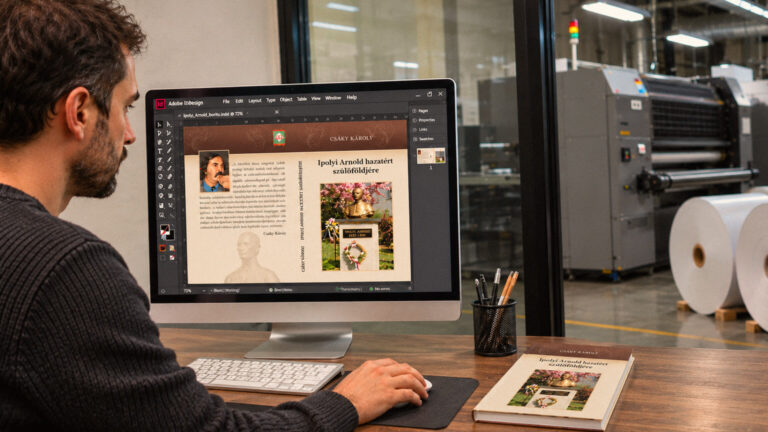
Learn how to prepare paperback, hardcover and dust-jacket artwork for professional printing. Explore cover dimensions, bleed, spine calculations, colour management, special finishes, print-ready PDF export and the complete production handoff package for your printing team.

Discover which ChatGPT business features are available to Slovak and Hungarian companies, what restrictions apply, and how to improve your visibility in AI-powered search. The article also covers technical SEO, ecommerce product feeds, EU legal considerations and referral tracking.

