Let’s Build Something Great
Tell us about your goals and request a free project estimate.


CAPTCHA (Completely Automated Public Turing test to tell Computers and Humans Apart) is a security mechanism designed to distinguish between human users and automated bots. It presents challenges that are easy for humans but difficult for machines, protecting forms, login pages, signup processes, and other critical web interactions from automated abuse.
The significance of CAPTCHA in web security lies in its ability to prevent spam, brute force attacks, credential stuffing, and other malicious automated activities. However, CAPTCHA has evolved considerably since its inception-from rudimentary distorted text puzzles to sophisticated AI-powered behavioral analysis and invisible verification.
In this guide, we examine CAPTCHA types, leading providers, security implications, accessibility requirements, and best practices for implementation in modern web applications.
CAPTCHA is a security tool that presents users with tests that are easy for humans to solve but difficult for automated bots. The term was coined in 2000 by researchers at Carnegie Mellon University.
The first known CAPTCHA system was deployed in 1997 by AltaVista to stop bots from spamming its URL submission form. It worked: spam dropped by 95%.
How CAPTCHA works in 2026: Modern systems now silently analyze mouse tracks, device features, and browsing rhythm, triggering interactive challenges like sliders only if behavior is suspicious. Some also use background Proof-of-Work tasks to exhaust bot resources without interrupting the user experience.
CAPTCHA’s role has changed. It functions less as a constant test and more as a risk confirmation mechanism-activated at high-impact moments to distinguish real users from automated abuse without constant friction.
The original form-distorted or obscured text that users must transcribe. Obfuscation techniques include adding noise, rotating text, and distorting characters.
Advantages:
Disadvantages:
Users identify images that meet a certain criterion-select all images containing a traffic light or a car.
Advantages:
Disadvantages:
Provides an audio clip users must listen to and transcribe, designed for accessibility.
Advantages:
Disadvantages:
reCAPTCHA v2 presents a checkbox labeled “I’m not a robot.” Behind the scenes, Google evaluates user behavior such as mouse movements and click timing.
reCAPTCHA v3 operates entirely in the background-no puzzles, no checkboxes, no interruptions. Google’s system continuously observes user behavior and assigns a risk score to every interaction.
Risk scoring: Scores range from 0.0 to 1.0. On the free tier, reCAPTCHA v3 exposes only four discrete score levels (0.1, 0.3, 0.7, and 0.9). The full 11-level range requires a billing account. Google recommends starting with a threshold of 0.5 and tuning based on your traffic patterns.
Tier structure (2026): Google organizes reCAPTCHA into three tiers: Essentials (free), Premium (pay-as-you-go), and Enterprise (subscription)-each unlocking progressively more advanced capabilities.
Free tier limit: 10,000 assessments across all sites and keys per month.
Cloudflare Turnstile is Cloudflare’s CAPTCHA-alternative solution. It runs a client-side challenge directly in the background of the visitor’s browser. In most cases, nothing further is required from the visitor-if necessary, Turnstile may display a simple checkbox.
Turnstile is free with no usage limits and offers three widget types:
hCaptcha is a privacy-focused CAPTCHA that uses visual challenges. Site owners can earn credits, and it is GDPR-compliant. hCaptcha reports 70-90% reductions in total attack volume in 2026 when comparing traffic on sites that deploy hCaptcha Enterprise vs. pre-deployment attack levels.
FunCaptcha (Arkose Labs) uses gamified puzzles that involve minimal user effort but pose challenges to bots.
| Provider | Security Strength | User Experience | Privacy | Pricing |
|---|---|---|---|---|
| reCAPTCHA v3 | High-behavioral risk scoring | Invisible-no user interaction | Privacy concerns-Google data collection | Free up to 10k assessments/month |
| reCAPTCHA Enterprise | Maximum-advanced protection | Invisible with fallback options | Privacy concerns-extensive data collection | Usage-based |
| Cloudflare Turnstile | Strong-background challenges | Invisible or minimal interaction | Privacy-focused | Free, no usage limits |
| hCaptcha | Strong-visual challenges, evolving | Visual puzzles when triggered | Privacy-focused, GDPR-compliant | Free tier + paid options |
| FunCaptcha | Strong-gamified puzzles | Engaging puzzles | Varies | Commercial |
CAPTCHAs prevent credential stuffing, scraping, and DDoS attacks by distinguishing humans from bots. reCAPTCHA v3 runs silently in the background, detecting bots based on activity patterns without user interaction.
Requiring CAPTCHA completion after a certain number of failed login attempts halts brute force attacks. Implementation varies by use case-for login protection, reCAPTCHA v3 can detect suspicious attempts without presenting challenges.
CAPTCHAs prevent bots from completing forms for account creation, comments, or messages. hCaptcha is popular for preventing fake signups.
Modern AI poses a serious threat to CAPTCHA security:
Mitigation: Studies show that incorporating fine-grained localization and implicit counting reduces MLLM success rates from over 95% to 0%.
CAPTCHA farms use human workers to solve CAPTCHAs in real-time for a small fee. Both reCAPTCHA and hCaptcha are defeated by commercial CAPTCHA farms.
Mitigation: Solutions like reCAPTCHA v3, which monitor behavior instead of requiring direct interaction, reduce exposure to CAPTCHA farms.
Attackers use headless browsers to simulate human actions and bypass CAPTCHA systems. Combining CAPTCHAs with behavioral analysis tools or advanced fingerprinting techniques helps detect and block bots using headless browsers.
CAPTCHAs present significant accessibility barriers. WCAG 2.1 requires:
reCAPTCHA accessibility concerns: The W3C Draft Note reports that keyboard navigation has been widely observed to fail in reCAPTCHA v2, and audio CAPTCHAs are sometimes no longer provided.
Accessible Authentication (WCAG 3.3.8): Users with cognitive disabilities may not be able to solve puzzles or complete CAPTCHAs. Authentication barriers lock these users out of services entirely.
| Bypass Method | Description | Mitigation |
|---|---|---|
| CAPTCHA farms | Human workers solve CAPTCHAs in real-time | Use behavioral analysis (reCAPTCHA v3) instead of challenges |
| Machine learning | AI models trained to recognize patterns in CAPTCHAs | Evolve challenges continuously; use fine-grained localization |
| Headless browsers | Simulate human actions without UI | Combine with fingerprinting and behavioral analysis |
| MLLM solvers | Multimodal LLMs solve visual CAPTCHAs | Use tasks requiring fine-grained spatial reasoning |
Consider these criteria: security, user friction, accessibility, privacy review, and operational control.
| Use Case | Recommended Solution |
|---|---|
| High-traffic, privacy-sensitive | Cloudflare Turnstile (free, no limits, privacy-focused) |
| Maximum bot detection | reCAPTCHA Enterprise or reCAPTCHA v3 with custom thresholds |
| Privacy-first visual challenges | hCaptcha |
| Accessibility priority | Invisible solutions like Turnstile or reCAPTCHA v3 |
Frontend: Most CAPTCHA providers offer JavaScript libraries for easy integration with React, Angular, or Vue.js.
Backend: Server-side validation is crucial-verify the CAPTCHA token before allowing form submission or login using the provider’s validation API.
Step-up authentication: If reCAPTCHA v3 assigns a low score, do not block the user immediately. Instead, trigger a step-up check-visual CAPTCHA, email verification, one-time passcode, or multi-factor authentication.
Protect your OpenCart 3.x+ and 4.x+ store against spam, bots, and automated abuse with Google’s reCAPTCHA service. Support for reCAPTCHA v3, v2 Checkbox, and v2 Invisible allows you to balance security and user experience while integrating naturally with your store’s design.
The next generation leverages AI to identify user behavior more accurately. Rather than asking users to solve puzzles, AI analyzes patterns like mouse movement, typing cadence, and navigation behavior.
Fingerprint scanning, facial recognition, and voice recognition may eventually replace traditional CAPTCHAs, especially in sensitive applications like banking or healthcare.
Future CAPTCHAs will use data points like browsing history, device information, and interaction patterns to detect suspicious activity without disrupting user experience.
Combining CAPTCHAs with MFA ensures that even if a CAPTCHA is bypassed, an additional layer of security (like a one-time password or biometric verification) is still required.
CAPTCHA remains a crucial element of web security, offering protection against automated bots, brute force attacks, and spam. However, as AI capabilities advance, CAPTCHA systems must evolve. The fundamental premise of CAPTCHA-that there exist tasks humans can do easily but machines cannot-is collapsing.
The most effective approach in 2026 combines invisible behavioral analysis with step-up authentication, privacy-friendly solutions, and defense-in-depth security measures. For most websites, Cloudflare Turnstile offers a strong, free, privacy-focused solution. For those requiring maximum bot detection, reCAPTCHA Enterprise or carefully tuned reCAPTCHA v3 remains effective.
Understanding the different CAPTCHA types, their strengths and weaknesses, and how to integrate them effectively is essential for web developers and security professionals. By staying informed and implementing CAPTCHAs thoughtfully, you can protect your applications while ensuring a positive user experience.
Need help securing your web applications? Playful Sparkle has been engineering digital products since 2004, offering Web Development, App Development, and SEO & Digital Marketing services. Our team can help you implement effective CAPTCHA solutions that balance security, privacy, and user experience. Contact us to discuss how we can help protect your website from automated threats.



The EU AI Act’s Article 50 transparency rules apply from 2 August 2026. Learn which AI systems are covered, what businesses must disclose, key deadlines, penalties, and the latest compliance requirements.
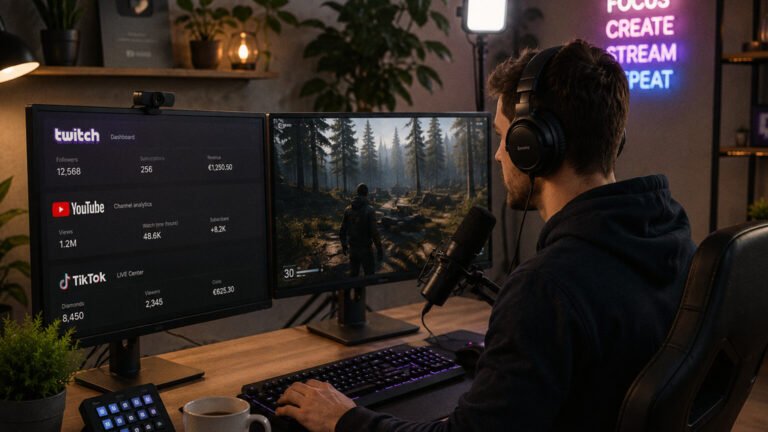
Live streaming income guide 2026: Twitch vs YouTube vs TikTok requirements, revenue splits (70% YouTube, 50% Twitch default), income estimates (€ 3,000–€ 8,000/month full-time), and audience demographics.

YouTube changed its public view-counting system on August 24, 2026. Learn how first-frame views affect reporting, creator analytics, engagement metrics, and YouTube Partner Programme requirements.

